If you're comparing landscape lighting proposals and one calls out low voltage while another mentions high voltage or line voltage, you're looking at two different approaches to getting light onto your property, and they carry very different implications for safety, flexibility, and long-term cost. We exclusively design and install low voltage systems. We do not install high voltage lighting.
The short version
- Low voltage: runs on 12 volts, stepped down safely from your home's power through a transformer. Safer to install and live with, more flexible to design around, and gentler on your energy bill.
- High voltage: runs directly on standard household power (120V). Brighter output per fixture and fewer fixtures needed, but it comes with real trade-offs in safety, installation requirements, and design flexibility.
- What we install: low voltage systems on every project, designed around your property rather than forced to fit a higher-power system's constraints.
Safety is the real story
High voltage wiring on a residential property means exposed household-level current running through your yard, buried near sprinkler lines, root systems, and areas where kids and pets spend time. Low voltage systems remove most of that risk. Even in the rare case a line is nicked or exposed, it doesn't carry the same danger.
What we spec
A low voltage system, transformer-fed and designed around your property's layout, using high-efficiency LED fixtures built to run on low voltage. This pairing means longer fixture life and a higher quality of light output than older voltage-and-bulb combinations allow.
Flexibility and design control
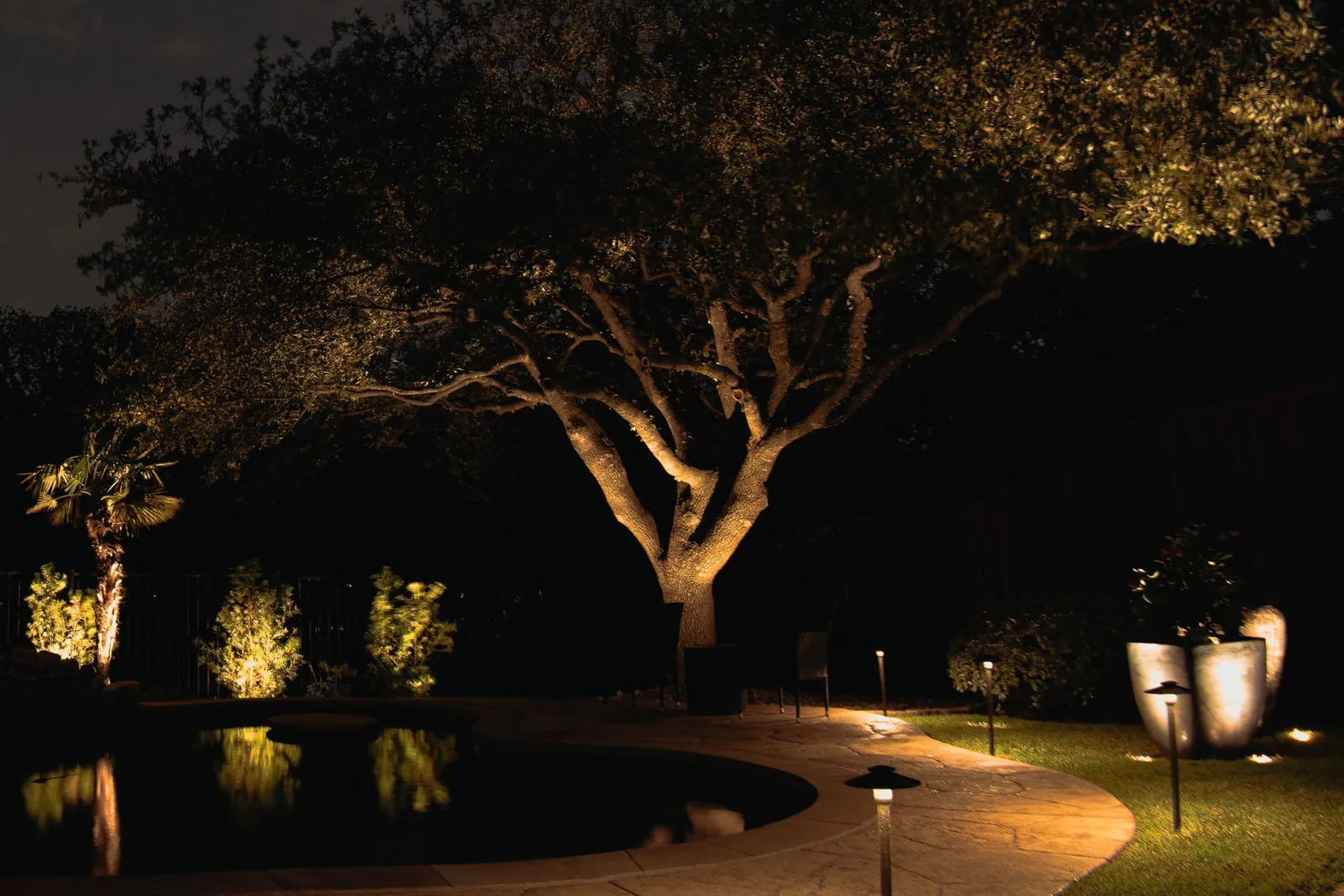
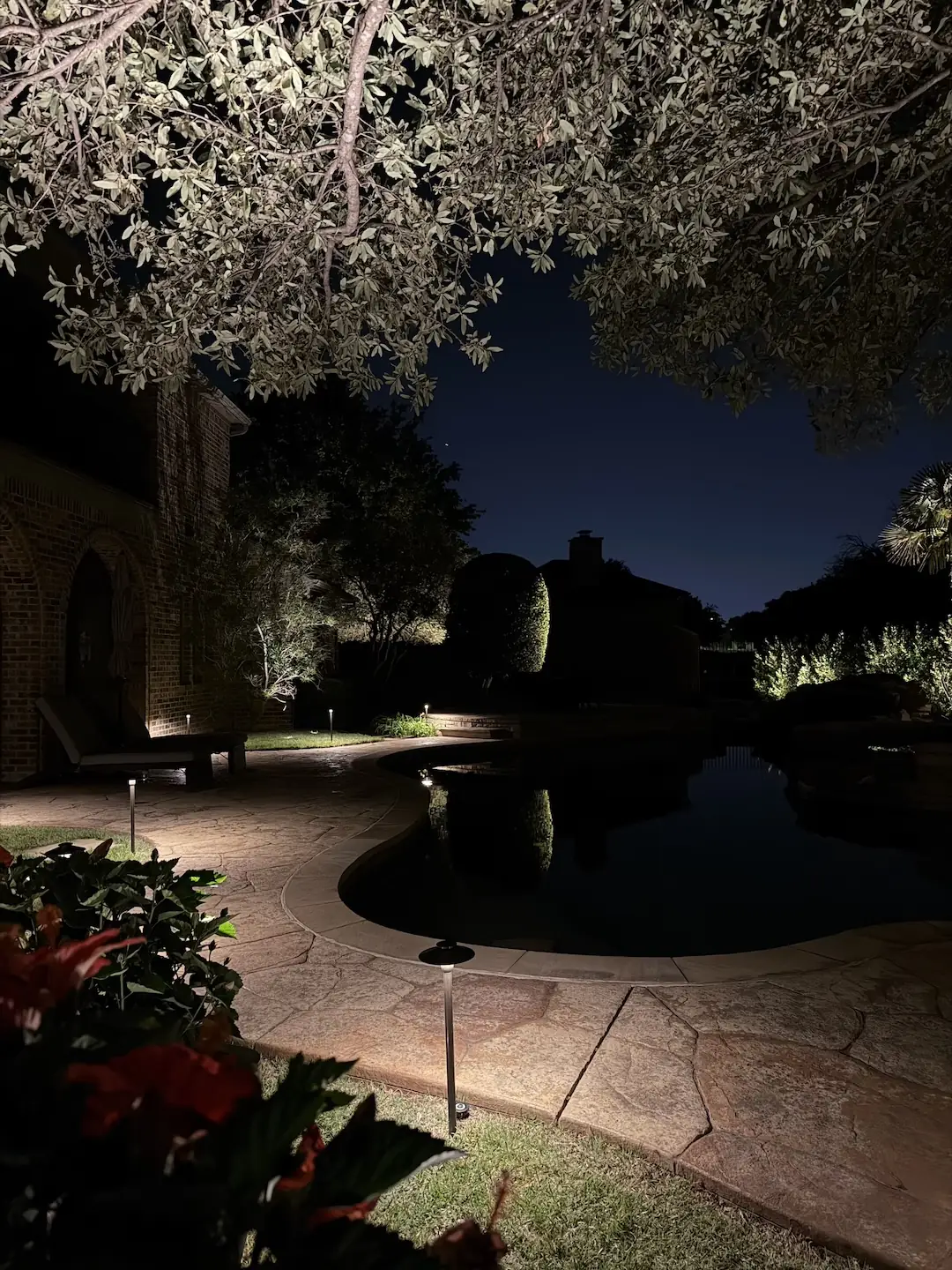
Low voltage systems give us far more freedom in fixture placement, beam spread, and layering light across a property. Uplighting a tree, grazing a stone facade, and lining a path can all live on the same thoughtfully designed system. High voltage setups are typically built for raw brightness over large areas, not the layered, intentional look we aim for.
Energy use and long-term cost
Low voltage systems draw meaningfully less power than an equivalent high voltage setup, which shows up as a smaller impact on your electric bill and a system that's simpler and less costly to expand later.
If your property currently has high voltage lighting
We're happy to remove an existing high voltage system as part of designing and installing a new low voltage system in its place. In fact, we recommend it. Transitioning off high voltage is typically the safer, more durable, and more design-flexible long-term option for a residential property.
What this means for your quote
If a proposal leans on high voltage fixtures for a residential property, it's worth understanding why. A well-designed low voltage system is safer, more adaptable, and built around fixtures made to get the most out of it, which is why it's the only approach we build our systems on.